Localizing the Substrate: The Science Granting Councils’ Move to Sovereign AI
The conventional model of artificial intelligence development remains deeply centralized, powered by hyperscale data centers concentrated in a handful of Western markets. While these cloud systems host massive computing capacity, they are fundamentally ill-suited for the structural realities of emerging markets. They demand massive, uninterrupted electrical grids, high-bandwidth pipelines, and extensive capital investments—operational assumptions that do not hold in many regional contexts.
This mismatch has triggered a severe sovereignty and ethical gap. When local institutions, agricultural centers, and healthcare networks rely entirely on remote, foreign-owned clouds, they inherit high network latencies, face unpredictable access costs, and lose direct ownership of their primary datasets.
To build an equitable digital future, the continent cannot merely rent remote AI models; it must fund, build, and regulate its own physical and computational infrastructure.
To bridge this baseline resource gap, the Science Granting Councils Initiative (SGCI)—backed by a global coalition of funders—has launched a historic $12 million multilateral research call. For the first time, this initiative shifts away from general capacity-building to directly fund high-impact, cross-border research consortia across five critical continental priorities:
                  ┌──► 1. Artificial Intelligence (AI)
                  ├──► 2. Agriculture & Precision Farming
[$12M SGCI Fund] ─┼──► 3. Local Energy Systems
                  ├──► 4. Environmental Resilience
                  └──► 5. Healthcare & Clinical Medicine
By requiring multi-country partnerships (combining three to five institutions across different participating nations), the fund ensures that research is natively collaborative rather than siloed. This regional execution allows science councils—ranging from East African academic hubs in Kenya and Uganda to dedicated AI development pipelines in Nigeria—to directly finance regional solutions. This ensures that the scientific outputs directly serve domestic interests and are governed by regional oversight.
As noted by global policy analysts in TIME, the ultimate measure of AI's success in developing economies is not the sheer size of its parameter counts but how effectively it addresses everyday challenges. The greatest immediate opportunities do not lie in bloated, multi-billion-parameter generic models that consume vast amounts of electricity and water. Instead, they lie in targeted, practical applications that run efficiently on local, accessible devices.
[Remote Cloud Model] ──► (High Latency, High Energy, Carbon Footprint) ──► [Rural Barriers]

[Self-Hosted Edge Model] ──► (Low Power, Local Data, Dialect Support) ──► [High-Impact Solutions]
A farmer diagnosing cassava crop diseases using a smartphone camera, or a rural nurse navigating a clinical procedure guide step by step—these high-stakes use cases require immediate, offline-capable, and culturally grounded processing. Self-hosting smaller, highly specialized open-weights models close to where data is generated bypasses the need for massive remote computing grids. This localization makes life-saving technologies functionally resilient, even in areas with volatile connectivity.
The primary physical hurdle to running local AI inference is power stability. Attempting to run heavy, uninterrupted computing workloads on fragile national power grids invites constant service disruptions and places immense strain on public utilities.
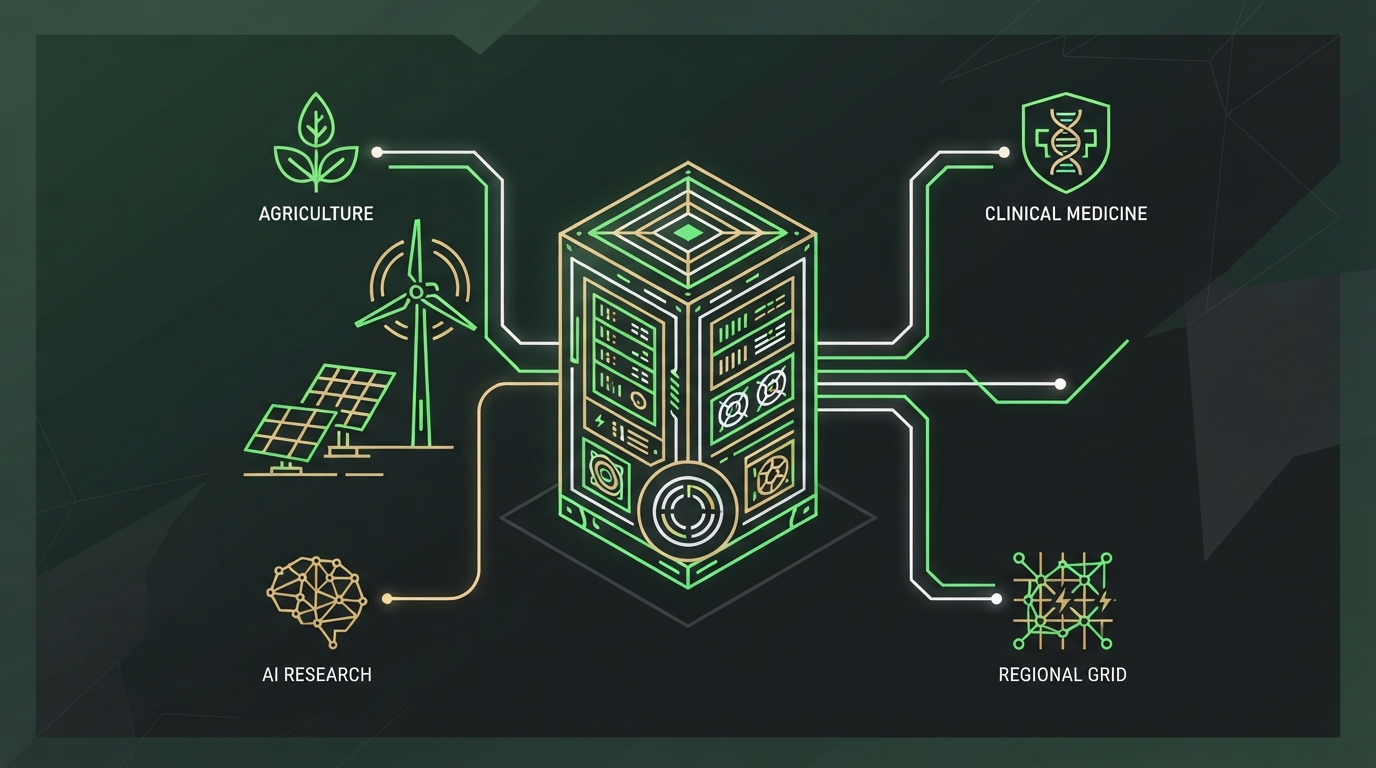
To mitigate this bottleneck, the next phase of infrastructure deployment must focus on behind-the-meter, localized compute nodes. By co-locating modular, specialized server units directly with regional renewable energy projects—such as geothermal wells, wind corridors, or solar microgrids—operators can filter grid volatility and decouple AI operations from municipal power systems. This decentralized infrastructure model ensures that high-density computing clusters are both ecologically sustainable and physically secure.
The joint initiative launched by the Science Granting Councils and their international partners represents a decisive shift away from technological dependency. Establishing local control over data pipelines and computing infrastructure is no longer just a legal goal; it is a fundamental requirement for social and economic resilience.
By combining $12 million in targeted cross-border research funding with localized, grid-adapted server footprints, the continent is laying down an ethical, high-impact blueprint for technological self-reliance. This ensures that digital tools are built with local inputs, managed by local hands, and engineered specifically to improve human lives.
Are you prepared to keep relying on remote, opaque foreign clouds, or are you ready to invest in self-hosted, sovereign computing infrastructure designed for your actual environment?
Sources
Stay updated
Get our latest technical articles and product updates delivered to your inbox.