The Agentic Shift: Infrastructure, Education, and Africa’s Emerging AI Ecosystem
For too long, the narrative of African technology has focused primarily on consumption and technology access. This model is hitting a structural wall. Relying entirely on remote, foreign-hosted cloud setups leaves local developers with high network latencies and soaring API costs, while isolating them from the foundational engineering of the tools they use.
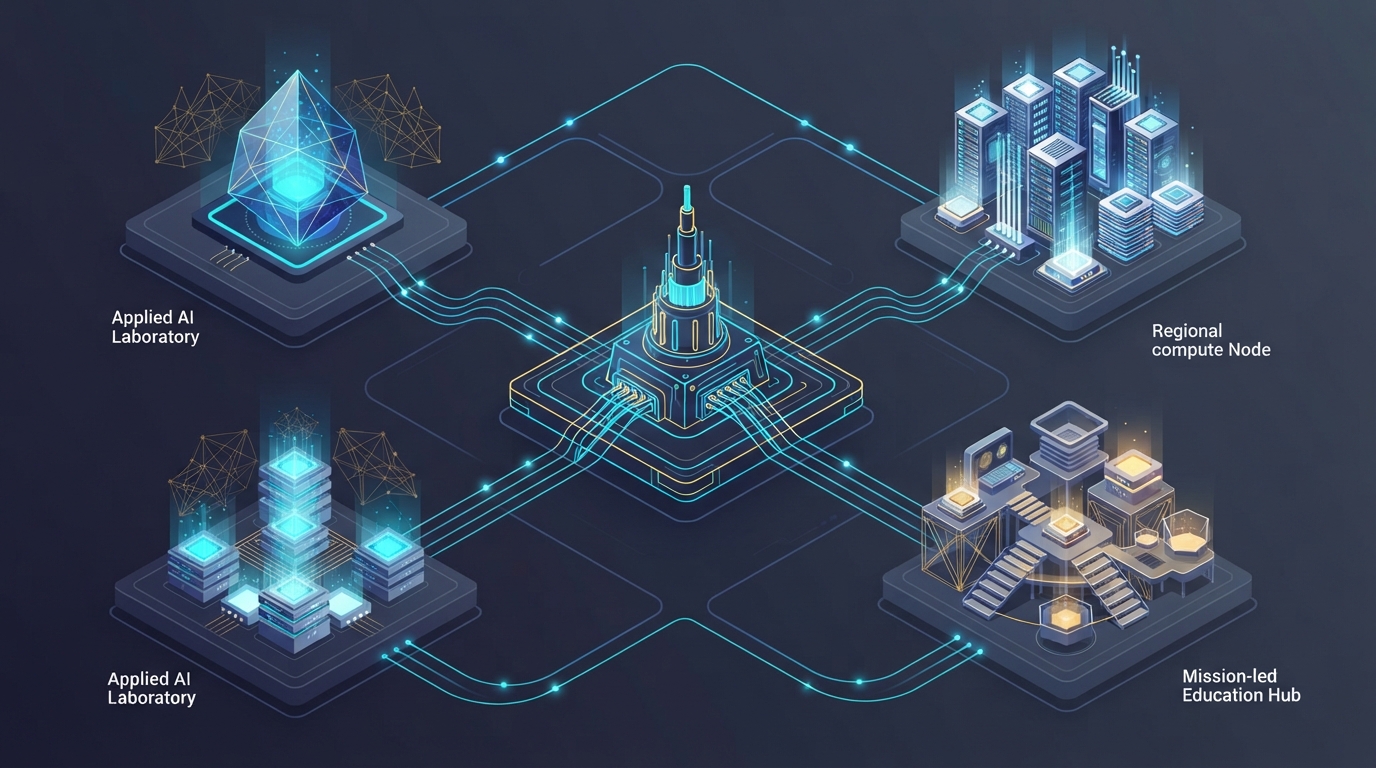
To build a resilient digital economy, the focus must shift from simply training users to building localized, high-capacity digital corridors. Africa cannot merely rent cloud space from foreign operators; it must own the physical pipelines and the local computing infrastructure that drive automated systems.
[Legacy Connectivity: Indirect Routing] ──► (High Latency, Overseas Hops) ──► [Slower Cloud Services]

[Umoja Subsea Corridor: Direct Path]   ──► (S.A. Digital Exchange Port)  ──► [High-Speed Global Transit]
To solve the underlying connectivity deficit, a massive expansion of physical infrastructure is underway. Central to this effort is Google’s plan to establish South Africa's first Digital Exchange Port in the Eastern Cape. This major internet hub will directly connect the continent to Australia via the Umoja subsea cable—the first fiber-optic route connecting Africa to the Asia-Pacific region—while also supporting a direct subsea path to India.
Instead of routing regional data through circuitous European pathways, this new digital corridor links local networks directly to global high-speed transit. By bringing international subsea cables, local internet providers, and cloud zones together at a single, high-capacity gateway, the exchange port provides the low-latency bandwidth and high-density compute resources necessary to build, test, and deploy complex AI models at scale.
The commercial pressure to deploy localized, automated infrastructure is accelerating across the corporate ecosystem. European HR scale-up Factorial recently raised $150 million in Series D funding at a $2.5 billion valuation, illustrating a major industry shift: the transition from traditional, passive SaaS platforms to AI-first workforce operations.
                  ┌──► 1. HR Systems (Automated Payroll & Compliance)
[Factorial One] ──┼──► 2. Finance Operations (Expense Tracking & Audits)
                  └──► 3. IT Workflows (Onboarding & Access Management)
Rather than simply adding minor AI features to existing software, modern enterprise platforms are rebuilding their architectures around dual-agent frameworks. One agent dynamically learns internal company policies, rules, and workflows across HR, finance, and IT, while a second agent supports employees in drafting work and executing tasks. For scaling businesses in East Africa and beyond, this shift from rigid database entry to active, automated problem-solving eliminates administrative friction, allowing teams to manage compliance and scale operations without multiplying their administrative headcount.
As physical infrastructure and enterprise tools scale, the tech sector faces a critical talent bottleneck: how do we prepare a massive workforce to lead in an AI-driven economy?
The answer is being pioneered by educational entrepreneurs like Fred Swaniker, founder of the African Leadership Group (comprising ALX and African Leadership University) and CEO of Sand Technologies. Rather than relying on outdated academic models that teach technology in a vacuum, Swaniker’s institutions challenge the traditional college "major" by asking students to declare a mission instead.
[Traditional Education] ──► Choose a Major ──► Passive Theory ──► Outdated Tech Skills

[Mission-Led Academy]   ──► Choose a Problem ──► Hands-On Work ──► Purpose-Driven AI Solutions
Before students write a single line of code, they are exposed to the world’s most pressing challenges—such as healthcare delivery, climate adaptation, and water security. Technical training in data science, cloud computing, and software development is then taught as a tool to solve those specific problems. This approach infuses technical education with systems thinking and ethical responsibility, preparing a highly skilled workforce of over 700,000 data and AI professionals to design locally relevant solutions that scale.
The bridge between world-class foundational research and commercial viability is being physically anchored in Accra, Ghana, with the launch of Africa's first Applied AI Lab. Supported by the Google AI Futures Fund and Google Research, the lab acts as a zero-to-one product accelerator for startup founders and researchers.
Rather than focusing on theoretical models, the Accra lab pairs African founders directly with Google’s research teams, providing them with early access to cutting-edge models (such as Gemini, Gemma, and Veo) before they hit the global market. Simultaneously, Google.org is investing over $1 million in partnerships with The Akuna Group to deliver creative AI education and advanced digital tools to underrepresented creators across the continent. This ensures that the next wave of creative technology is shaped by local voices, mapping regional dialects, and addressing local market dynamics.
The combination of deep subsea infrastructure, agentic enterprise software, and mission-driven education marks the end of the technological dependency model. Digital sovereignty is no longer a legal abstraction; it is the physical foundation for economic self-reliance.
By building high-speed digital corridors, deploying autonomous workforce tools, and training a generation of purpose-driven developers, the continent is stepping past the phase of renting foreign cloud space. It is entering an era where it builds the systems, trains the minds, and designs the technological future on its own terms.
Are you going to continue relying on external, off-the-shelf software to manage your organization's growth, or are you ready to invest in the local infrastructure and talent needed to own your engine room?
Sources
- 1.Google Cloud launches new AI development initiatives for Africa - Developing Telecoms
- 2.Factorial Raises $150 Million at $2.5 Billion Valuation, Pivots to AI Workforce Platform With East Africa Growth Push - iAfrica.com
- 3.‘It’s a great equalizer’: The CEO using tech education to prepare Africa’s next wave of global talent - CNN
Stay updated
Get our latest technical articles and product updates delivered to your inbox.