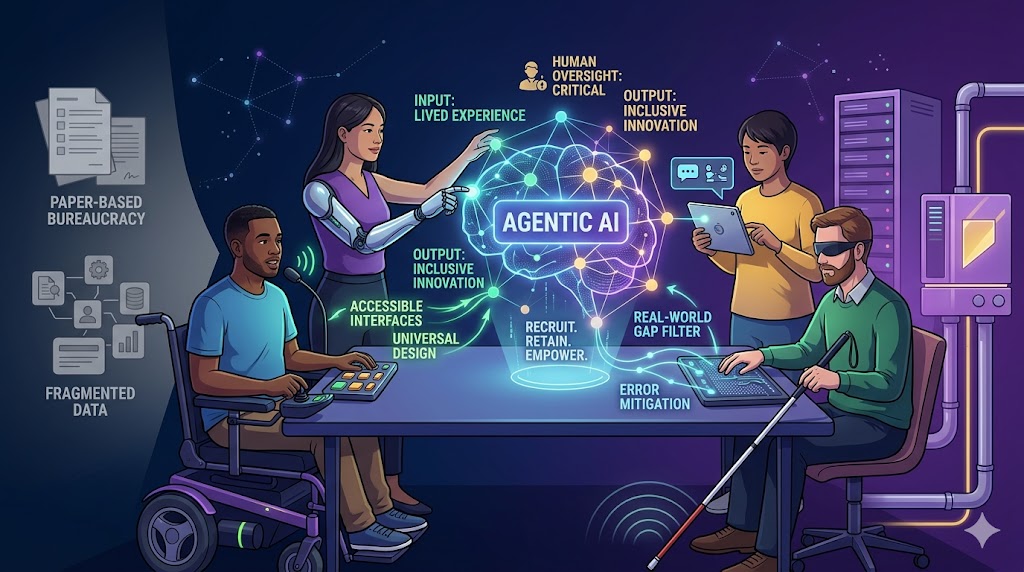
Revolutionizing Accessibility: The Critical Role of AI in Inclusive Development
Revolutionizing Accessibility: The Critical Role of AI in Inclusive Development
The world is witnessing a profound shift towards automation and digital transformation. However, as AI tools become increasingly prevalent, the industry faces a pivotal moment to ensure they are accessible and inclusive. This post delves into why genuine progress requires more disabled creators at the forefront of tech innovation.
The Pivotal Role of Disabled Creators
For decades, technology has been built by those who can see, hear, and understand the world in certain ways. However, this homogenous perspective is increasingly seen as a liability. Samuels underscores: 'We need more disabled creators in the tech space because they bring uniquely valuable perspectives, innovation, and problem-solving skills born of lived experience.'
A New Category of Assistive Technology
While AI has enabled some positives for the disability community—apps like Seeing AI from Microsoft and tools from Be My Eyes that can describe images or printed materials for people who are blind—the industry still faces genuine gaps. According to Samuels, 'AI is opening software development to people who were previously locked out of the field entirely.'
Real Issues with Accessibility
Despite these advancements, there are still real issues with the accessibility of the tools themselves. Devon highlights: 'There are still real issues with the accessibility of the tools themselves. But as more pathways open up to interact with models through voice, through assistive technology, through natural language, development literally becomes more accessible to everyone.'
The Urgency for Inclusive Development
The urgency for inclusive development is not just a moral imperative; it's also a strategic one. As AI tools become integral in various industries, their accessibility and inclusivity will determine whether they can deliver on the promises of efficiency and innovation.
Human Oversight: A Critical Component
Shamsul Izhan cautions that sometimes 'the data is flawed and the model itself makes mistakes.' He emphasizes the critical role human oversight plays at the output stage to filter errors and ensure quality. 'Human oversight at the output stage is critical,' he reiterates.
The Path Forward: Recruit, Retain, Empower
To truly revolutionize accessibility in AI development, the industry needs to actively recruit disabled developers, pay them fairly, and give them decision-making power. As Samuels argues, 'The AI industry needs to actively recruit disabled developers, pay them fairly, and give them decision-making power.'
Conclusion: A Call for Inclusivity
In conclusion, the path forward lies in inclusivity. By bringing more disabled creators into tech innovation, we can ensure that AI tools are not only accessible but also meet the diverse needs of users worldwide. The time to act is now.
Note: This blog post explores why genuine progress requires more disabled creators at the forefront of tech innovation. It highlights real issues and opportunities within the AI industry, emphasizing human oversight as a critical component in achieving true inclusivity.
Sources
Stay updated
Get our latest technical articles and product updates delivered to your inbox.