Harnessing Sovereign AI: Amini, Foxconn, and Bull’s Strategic Initiative for Africa
For years, the global tech landscape has been dominated by centralized hyperscale data centers. While these massive cloud complexes offer immense computing power, they are fundamentally mismatched with the realities of emerging markets. They rely on ultra-stable national power grids, massive capital expenditure profiles, and multi-year construction timelines that effectively lock out local African stakeholders.
This infrastructure mismatch has created a severe sovereign compute gap. When an enterprise or a government department relies entirely on cloud servers located thousands of miles away, they inherit massive network latency, expose themselves to changing foreign regulatory frameworks, and lose structural ownership of their primary data pipelines.
To build a resilient digital economy, Africa cannot simply rent cloud space from outside operators; it must own the silicon and the power lines that drive local intelligence.
To address this baseline deficit, a highly specialized infrastructure alliance has emerged between Amini, Foxconn, and Bull. Rather than trying to duplicate Western hyperscale architectures, this partnership combines local operational context with world-class hardware manufacturing and systems engineering:
Amini (The Regional Orchestrator): Based in Nairobi, Amini operates one of Africa's leading platforms for locally anchored compute capacity. They provide the critical layer of regional execution, navigating the complex regulatory environments and building direct integration paths with local telecom networks, financial institutions, and state bodies.
Foxconn (The Hardware Engine): As the world’s largest provider of AI servers, Foxconn brings advanced computing systems, modular server rack architectures, and high-efficiency cooling technologies. Their inclusion ensures that the local edge nodes are built with the identical industrial-grade components found in the world’s top tier data clusters.
Bull (The Systems Architect): A French state-owned high-performance computing (HPC) specialist, Bull introduces deep expertise in full-spectrum software stack integration. They are responsible for tuning the low-level cluster orchestration layer, ensuring that distributed GPUs can process intensive workloads seamlessly under volatile conditions.
The primary technical constraint for data infrastructure in Africa is resource stability. A standard AI training cluster pulling megawatts of power cannot survive an unexpected voltage drop or grid failure without catastrophic corruption of its model training states.
[Volatile Power Grid] ──► [Modular Power Management Layer]
                                       │
                                       ▼ (Filtered, Constant Current)
[Modular AI Container] ──► [Foxconn High-Density GPU Racks] ──► [Bull Software Stack]
                                       ▲
                                       │
                         [Local Sovereign Regulation]
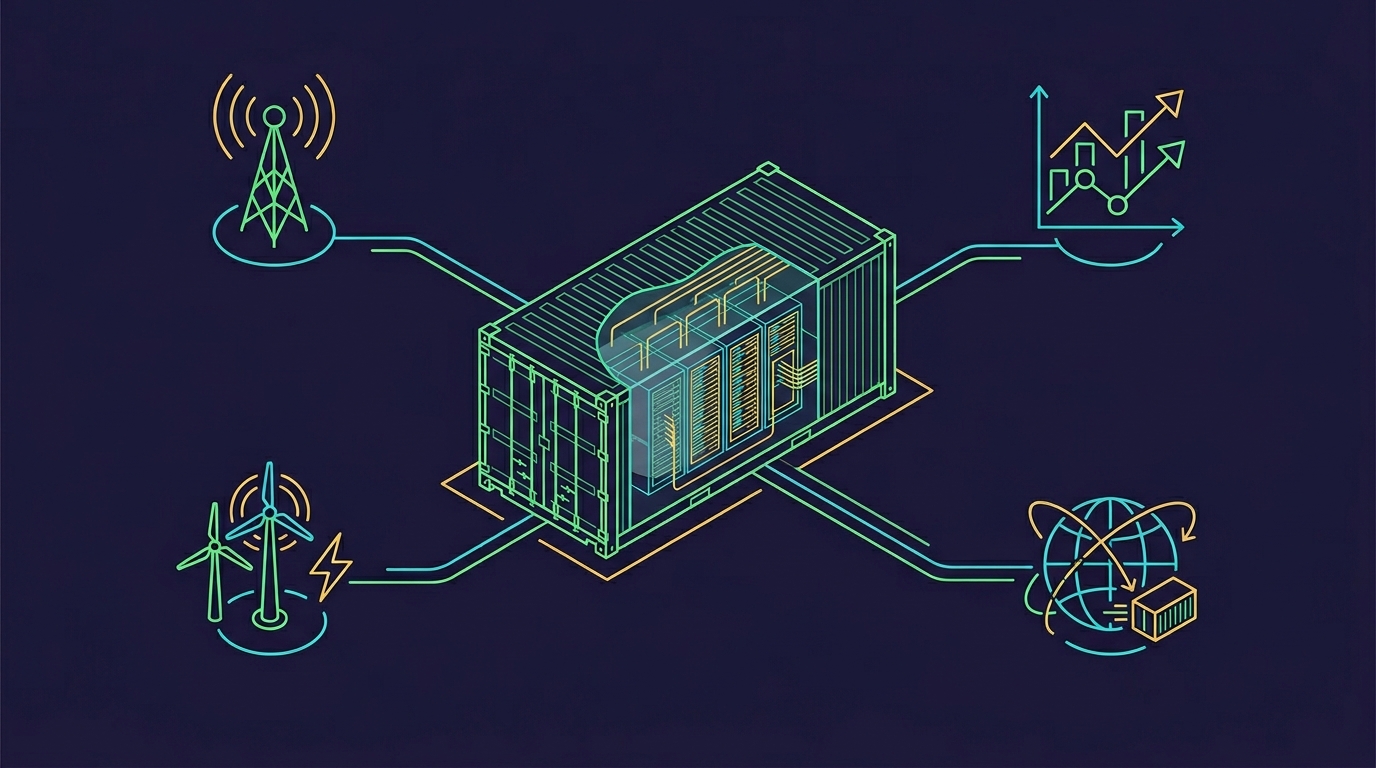
The data centers deployed by this initiative are engineered as standalone, modular units designed to thrive within localized infrastructure constraints. They feature hardened, automated power-management systems that filter grid volatility, fully decoupling the internal server architecture from external electrical fluctuations.
Crucially, while a traditional data center requires a 3-to-5-year development window, these modular units are built to be fully operational within 12 months. This hyper-accelerated timeline allows regional telecom operators, energy firms, and logistics hubs to scale up their compute capabilities in lockstep with immediate business demands, rather than waiting years for infrastructure to catch up.
The urgency for local, affordable AI infrastructure is being amplified by shifts in the African e-commerce and retail sectors. Giant pan-African platforms, such as Jumia, are aggressively restructuring their operations, implementing sweeping workforce reductions as they pivot toward automated, AI-driven backend systems.
When a dominant market player automates its logistics routing, customer service pipelines, and inventory tracking, it creates an intense competitive pressure across the entire economic ecosystem. Mid-tier enterprises and regional competitors are forced to adopt similar AI optimization frameworks simply to survive.
However, if these businesses are forced to pay for their AI inference in foreign currencies via cloud APIs, the operational cost becomes unsustainable. Localized sovereign infrastructure provides an essential economic release valve, giving domestic enterprises access to high-performance open-weights models at a predictable, domestic cost structure.
As computational power scales across the continent, engineers face a profound structural choice: how do we implement cutting-edge technology without washing away local identity and cultural sovereignty?
We see this tension vividly in the creative sectors. At events like the Atlantic Music Expo in Cape Verde, creators are grappling with how to integrate AI mixing, mastering, and distribution tools without losing the human essence and rhythm that defines African music. Simultaneously, open-source language identification models like CommonLingua are making massive strides by mapping 61 distinct African languages into core digital systems, ensuring these languages are recognized as standard operational interfaces rather than edge cases.
This infrastructure alliance provides the physical answer to this dilemma. By anchoring the data nodes within national borders, local developers can fine-tune frontier models on proprietary regional datasets, domestic dialects, and localized market dynamics. This ensures that the resulting AI systems reflect the precise needs and nuances of the citizens they serve, rather than relying on generalized models trained on external data.
The strategic initiative by Amini, Foxconn, and Bull represents the end of the infrastructure dependency model. Data sovereignty is no longer a legal abstraction or a matter of regulatory compliance; it is a hard requirement for economic resilience.
By building modular, grid-adapted, and locally operated data centers, this partnership establishes a new baseline for how emerging markets scale. Africa is moving past the phase of renting foreign cloud capacity and is stepping into an era where it owns the infrastructure, secures its own data, and designs its own technological future.
Are you content to rent your organization's intelligence from an external cloud, or are you ready to deploy a data center you can operate and own?
Sources
Stay updated
Get our latest technical articles and product updates delivered to your inbox.