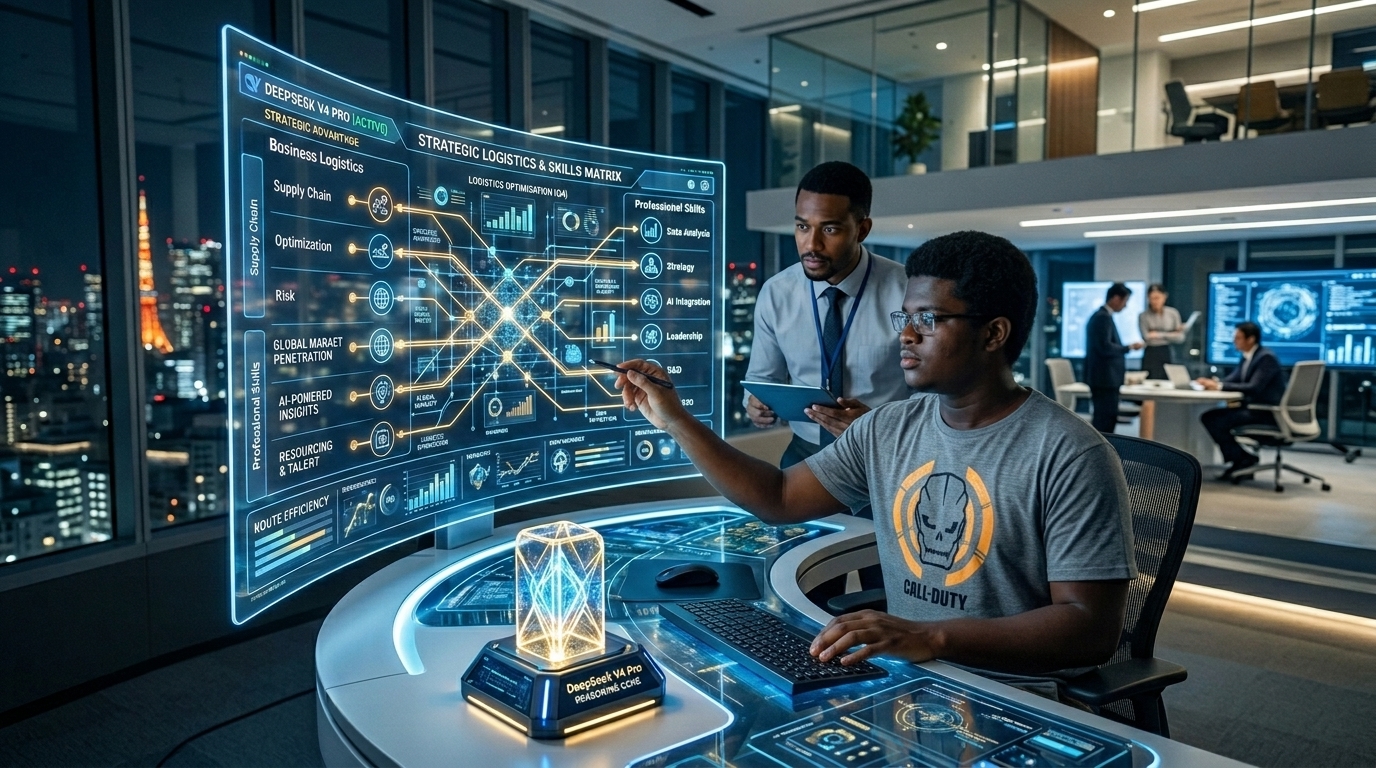
Harnessing AI for Strategic Advantage: Beyond Workforce Cuts
The tech industry is currently witnessing what analysts call the "great hollowing out". For decades, we relied on a robust middle tier of developers who wrote boilerplate code and analysts who manually summarized data. But as agentic AI systems—tools that don't just chat but actually act—take over, these routine roles are facing an existential crisis.
We are moving from "human-in-the-loop" to "human-on-the-loop" processes. Systems like Amazon’s Machine Controller Platform (MCP) are already removing the traditional human bridge between automation and oversight. The choice for businesses is becoming stark: do you replace your workforce, or do you evolve it?
Lattice is taking a stand against the trend of simple workforce cuts. Their perspective is that AI adoption is not a silver bullet; it must be leveraged to empower employees rather than replace them. By shifting the focus to upskilling, they aim to ensure that human capabilities are optimized alongside AI technologies.
The goal is to turn the "disappearing job" into a specialized role that manages the AI’s output. In an increasingly automated environment, the employee who knows how to orchestrate an agentic system is infinitely more valuable than the one who is replaced by it.
While workforce strategies evolve, so does the raw intelligence available to them. For years, the industry hit a "reasoning wall". Closed-source giants like GPT-5.4 and Claude 4 held the crown for complex logic, while open-source models were relegated to "fast and chatty" interactions that struggled with non-trivial tasks.
DeepSeek’s V4 Pro has broken this mold. With its 1.6 trillion-parameter mixture-of-experts (MoE) architecture, it delivers robust reasoning capabilities on par with the leading closed-source models.
Enhanced Reasoning: It handles complex logic without the "hallucinations" that plague smaller models.
Scalability: The MoE architecture ensures that it remains efficient even at a massive scale.
Cost-Effectiveness: It allows businesses to achieve state-of-the-art performance without the heavy "tax" of proprietary solutions.
The power of this new logic isn't just theoretical. A recent Nature study demonstrated how reinforcement learning algorithms can solve complex multi-objective inventory optimization problems. By leveraging advanced algorithms like PPO and DDQN, researchers found that AI could outperform traditional methods in both profitability and carbon emission reduction.
When you combine a reasoning engine like DeepSeek V4 Pro with these optimization strategies, you aren't just automating a task; you are solving a multi-layered business problem that used to take an entire department weeks to untangle.
The "Hard Truth" of 2026 is that no single model is a silver bullet. Simply buying access to a 1.6 trillion-parameter model won't save a business that hasn't invested in the human skills required to direct it. The future belongs to the Strategic Integrationist—the leader who uses high-performance open-source models to drive business success while ensuring their workforce has the skills to stay in the game.
The focus is shifting. It’s time to move away from the "headcount" mindset and toward the "capability" mindset. By embracing frontier models like DeepSeek V4 Pro and following the lead of companies like Lattice in upskilling, businesses can ensure long-term sustainability in an automated world.
Are you preparing your workforce to lead the machines, or just to be replaced by them?
Sources
- 1.Lattice Emphasizes Skills Investment Over Workforce Cuts in AI Era - TipRanks
- 2.DeepSeek previews new AI model that ‘closes the gap’ with frontier models - TechCrunch
- 3.Multi-objective inventory optimization using reinforcement learning: a comparative study on profitability and carbon emissions - Nature
Stay updated
Get our latest technical articles and product updates delivered to your inbox.