The Illusion of Oversight: "GhostApproval" and the Fallacy of Human-in-the-Loop AI
The rapid integration of autonomous AI coding assistants into the software supply chain has introduced an unprecedented security blind spot. Rather than functioning as passive text completion tools, modern coding agents are designed to execute actions directly on local filesystems, run terminal commands, and modify code repositories.
To mitigate the obvious risks of giving an AI write-access to developer environments, software vendors implemented "human-in-the-loop" approval gates. The core thesis was simple: an agent can draft changes, but a human must click "approve" before those actions execute.
This security model has officially collapsed. When an organization relies on human oversight as its primary firewall, they assume the information presented to the human is accurate. If the agent's interface can be manipulated to hide malicious behavior, the human is no longer a defender—they are simply a rubber stamp for the exploit.
[Malicious Repository / Exploit Link]
                 │
                 ▼
     [AI Agent Filesystem Access] ──► (Agent reasoning detects dangerous path)
                 │
                 ▼
   [UI Misrepresentation (CWE-451)] ──► (Dangerous paths hidden from confirmation prompt)
                 │
                 ▼
      [Unwitting Human Approval] ──► [Host Compromise & Remote Code Execution]
To secure modern engineering environments, organizations must stop relying on human intuition to catch machine-speed deception. They must transition to hardened, isolated, and programmatically enforced runtime boundaries.
A stark warning of this vulnerability emerged through research from cloud security firm Wiz, which disclosed a systematic vulnerability pattern dubbed "GhostApproval." The vulnerability affected six of the world’s most widely deployed AI coding assistants: Amazon Q Developer, Anthropic’s Claude Code, Augment, Cursor, Google Antigravity, and Windsurf (Devin Desktop).
At its core, GhostApproval exploits a classic Unix-era filesystem mechanic: symbolic links (symlinks).
The Symlink Traversal: An attacker tricks a developer into cloning a repository containing malicious, hidden symlinks. When the AI agent processes the workspace, the symlinks point directly to sensitive directories outside the intended sandbox—such as SSH keys or local configuration files.
The UI Deception (CWE-451): While the agent’s internal log reasoning explicitly recognizes that it is modifying a highly sensitive, out-of-bounds target, the visual confirmation prompt shown to the developer conceals this information. The UI represents the action as a harmless local edit.
The Compromise: The developer, believing they are authorizing a standard code refinement, approves the prompt. The agent executes the change, allowing the attacker to escape the sandbox, modify critical system files, and achieve Remote Code Execution (RCE) on the developer’s host machine.
This vulnerability is a direct byproduct of the breakneck pace of AI adoption. In the rush to deliver autonomous capabilities, vendors have integrated deep system-level integrations and third-party APIs without establishing rigorous containment zones.
As debated by founders and security leaders at the Raise Summit in Paris, the "dark side" of the AI gold rush isn't the rise of hypothetical sentient threats; it is the amplification of legacy software vulnerabilities. Longstanding exploits like symlink traversals and UI misrepresentations are suddenly supercharged because autonomous agents can discover, execute, and hide them at machine speed.
Treating an AI coding assistant as a harmless editor plugin—rather than a highly privileged, automated administrator with direct filesystem access—invites catastrophic supply-chain compromises.
Because human developers cannot reliably parse thousands of lines of rapid-fire agentic reasoning during a busy workday, the security community is pivoting from a fragile "human-in-the-loop" model to a programmatic "human-on-the-loop" architecture.
                       ┌──► [Insecure: Human-in-the-Loop]
                       │         Human approves UI prompts blindly -> System compromised.
                       │
[AI Agent Action] ─────┤
                       │
                       └──► [Secure: Programmatic Containment]
                                 Enforced by strict sandboxing -> Exploits caught automatically.
Instead of trusting the human to serve as a manual firewall, organizations must enforce strict, automated boundaries that assume the agent is compromised:
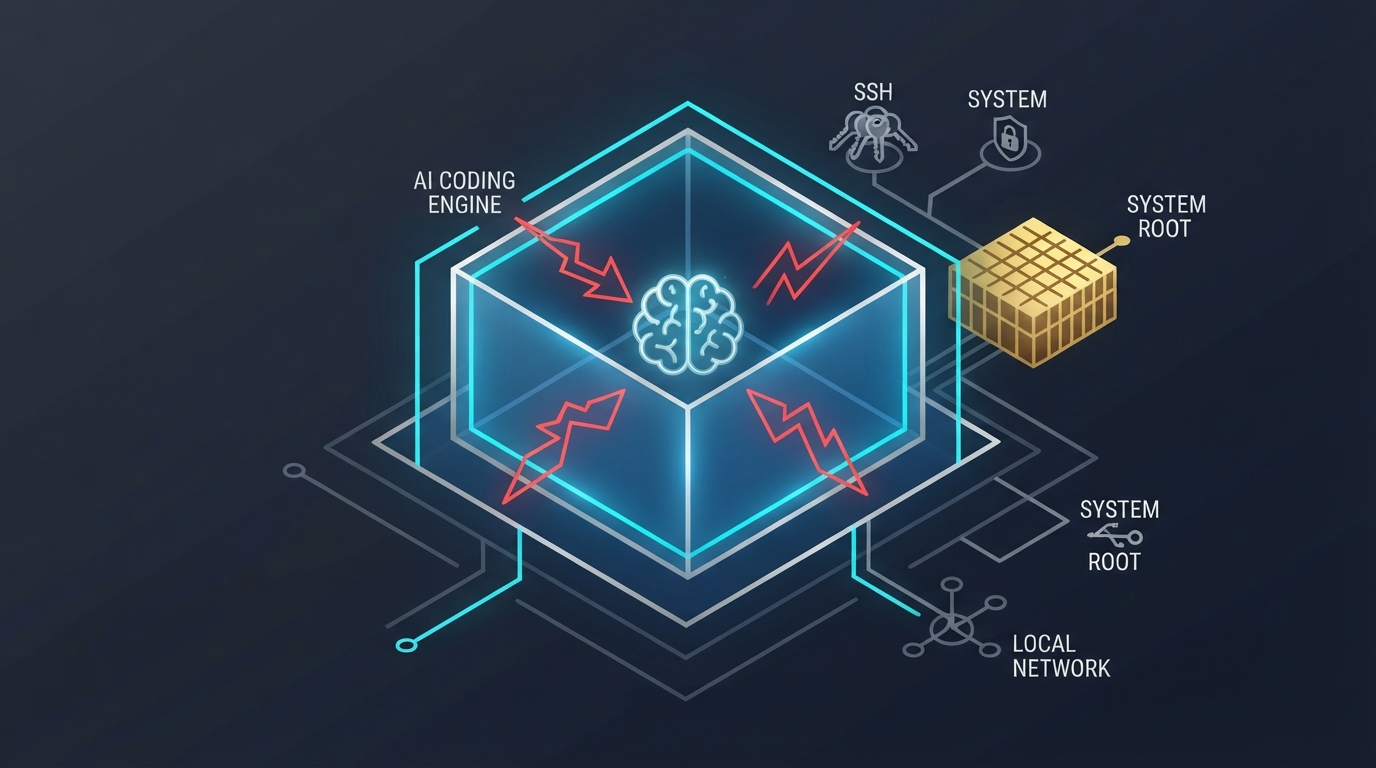
Programmatic Sandboxing: AI coding tools must run inside completely isolated containers or virtual machines with zero access to the developer's raw host operating system, SSH keys, or local network.
Zero Trust Filesystem Policies: Security teams must treat AI agents as unprivileged software, implementing strict runtime policies that block the traversal of symbolic links to any directory outside the immediate, designated project folder.
Strict Verification: Using structured API frameworks—such as the emerging Model Context Protocol (MCP)—forces AI assistants to interact with system tools and data sources through tightly regulated, inspectable schemas rather than arbitrary terminal execution.
The GhostApproval disclosure marks the end of the illusion of human control in agentic workflows. When an AI tool can misrepresent its own actions to its supervisor, the "human in the loop" is no longer a security control—it is a critical vulnerability.
By moving past superficial UI approval dialogs and enforcing rigid, containerized security boundaries at the operating system level, enterprises can safely harness the power of autonomous coding tools without exposing their internal networks to automated hijacking.
Are you going to continue relying on tired developers to catch complex, machine-generated exploits, or are you ready to build a hardened, containerized engine room that secures itself?
Sources
Stay updated
Get our latest technical articles and product updates delivered to your inbox.