Breaking the Defense Mythos: The Shift to AI-First Cybersecurity Architecture
For years, the global cybersecurity landscape has been dominated by static, signature-based defense tools. While these legacy systems offer a baseline layer of protection, they are fundamentally mismatched with the realities of modern threat vectors. They rely on predictable attack signatures, historical threat databases, and manual human intervention—frameworks that effectively lock out real-time protection against evolving threats.
This operational mismatch has created a severe defense gap. When an enterprise or government department relies entirely on reactive monitoring, they inherit massive security blind spots, expose their data to rapid-fire exploitation, and lose structural control over their digital infrastructure.
To build a resilient digital economy, organizations cannot simply patch existing legacy systems; they must fundamentally restructure the defense architecture that protects their operations.
To address this baseline deficit, security teams must understand the anatomy of modern, automated attacks. Rather than relying on human-directed, step-by-step compromises, modern threat actors combine advanced automation with exposed organizational resources:
[Exposed AI Endpoint] ──► [Unauthenticated Access (Ollama/LiteLLM)]
                                        │
                                        ▼ (Automated Payload Delivery)
[Autonomous Testing Client] ──► [Weaponized Prompts / Core Exploits] ──► [System Compromise]
                                        ▲
                                        │
                         [Hijacked Enterprise Infrastructure]
The Exposed Endpoint: Attackers target internet-facing inference endpoints—such as misconfigured Ollama (
/api/chat) or LiteLLM (/v1/responses) ports. These entry points frequently ship with missing authentication or weak default credentials.The Autonomous Client: Once an endpoint is discovered, threat actors configure open-source desktop clients or command-line interfaces to use the target infrastructure as their model backend.
The Weaponized Payload: The entire "brain" of the attack is delivered inside the request body, utilizing highly aggressive system prompts and integrated pentesting tools to execute nonstop offensive operations.
The primary technical constraint for traditional data defense is reaction time. A standard security operations center (SOC) triage queue cannot handle machine-speed risk without facing catastrophic alert fatigue and delayed containment windows.
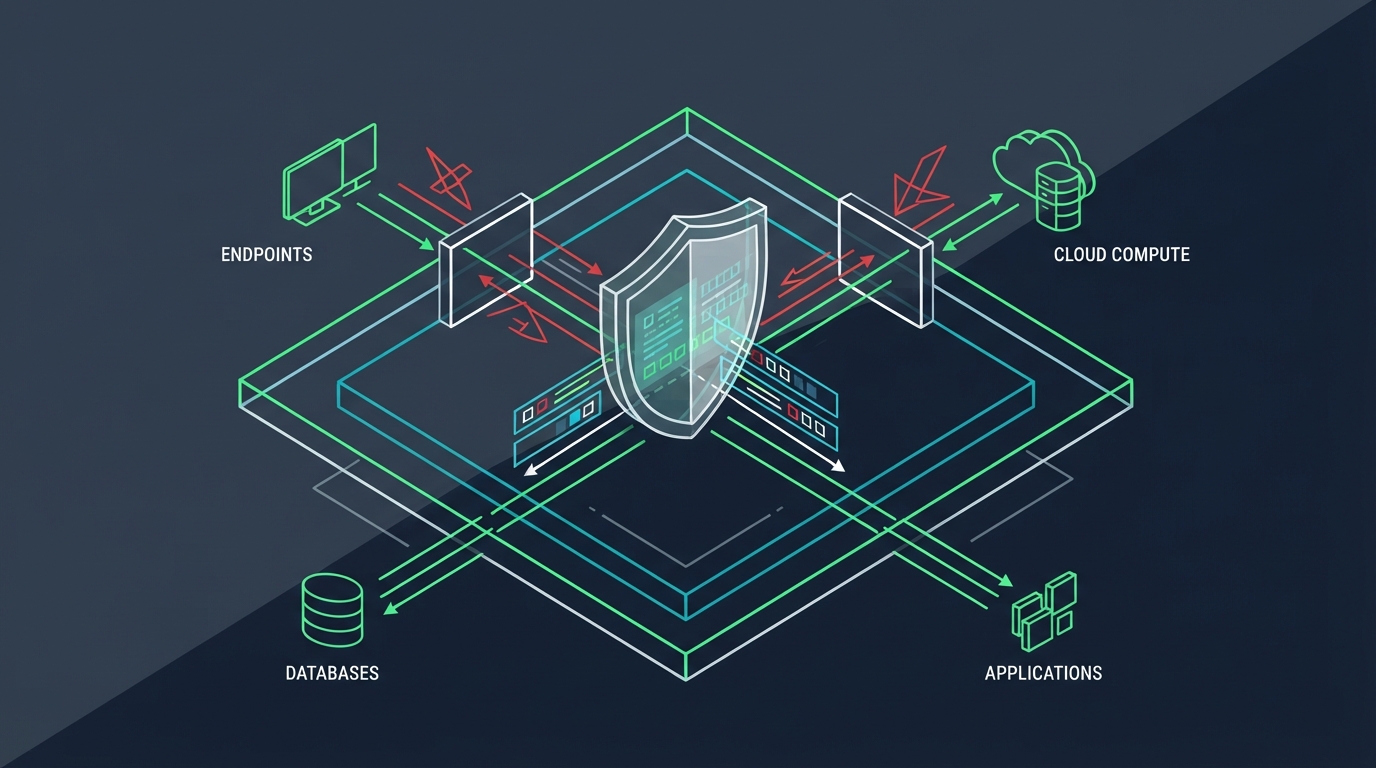
The security architecture deployed to combat these threats must be engineered as a proactive, continuous system. It features hardened, automated detection layers that filter out anomalous request traffic, fully decoupling threat mitigation from slow, manual review cycles.
Crucially, while a legacy incident investigation can take days to resolve, AI-first defense mechanisms isolate and block automated exploits within milliseconds. This hyper-accelerated timeline allows enterprise networks, cloud providers, and data hubs to scale their defensive posture in lockstep with immediate threat surges, rather than waiting for human analysts to catch up.
The urgency for localized, adaptive security is being amplified by the commercialization of offensive AI. Threat actors are aggressively restructuring their workflows, implementing automated frameworks to discover and exploit target environments at a scale never seen before.
When a malicious actor automates their reconnaissance, vulnerability scanning, and payload generation, it creates intense defensive pressure across the entire corporate ecosystem. Mid-tier enterprises and major corporations alike are forced to upgrade their threat-hunting capabilities simply to survive.
However, if these businesses are forced to pay for security remediation after a breach has occurred, the operational cost becomes unsustainable. Localized, proactive architecture provides an essential economic release valve, giving security teams the power to reject malicious traffic at the perimeter before it consumes costly computational and analytical resources.
Moving to an AI-first security model represents the end of the reactive dependency framework. Real-time threat validation is no longer a luxury or a matter of simple regulatory compliance; it is a hard requirement for corporate survival.
By building adaptive, automated, and continuous defense structures, organizations establish a new baseline for resilience. Enterprises are moving past the phase of renting fragmented, point-in-time security tools and are stepping into an era where they own their digital defense, secure their own data pipelines, and control their technological future.
Are you content to rent your organization's security posture from an external vendor's patch cycle, or are you ready to deploy a defense model you can fully control and own?
Sources
Stay updated
Get our latest technical articles and product updates delivered to your inbox.