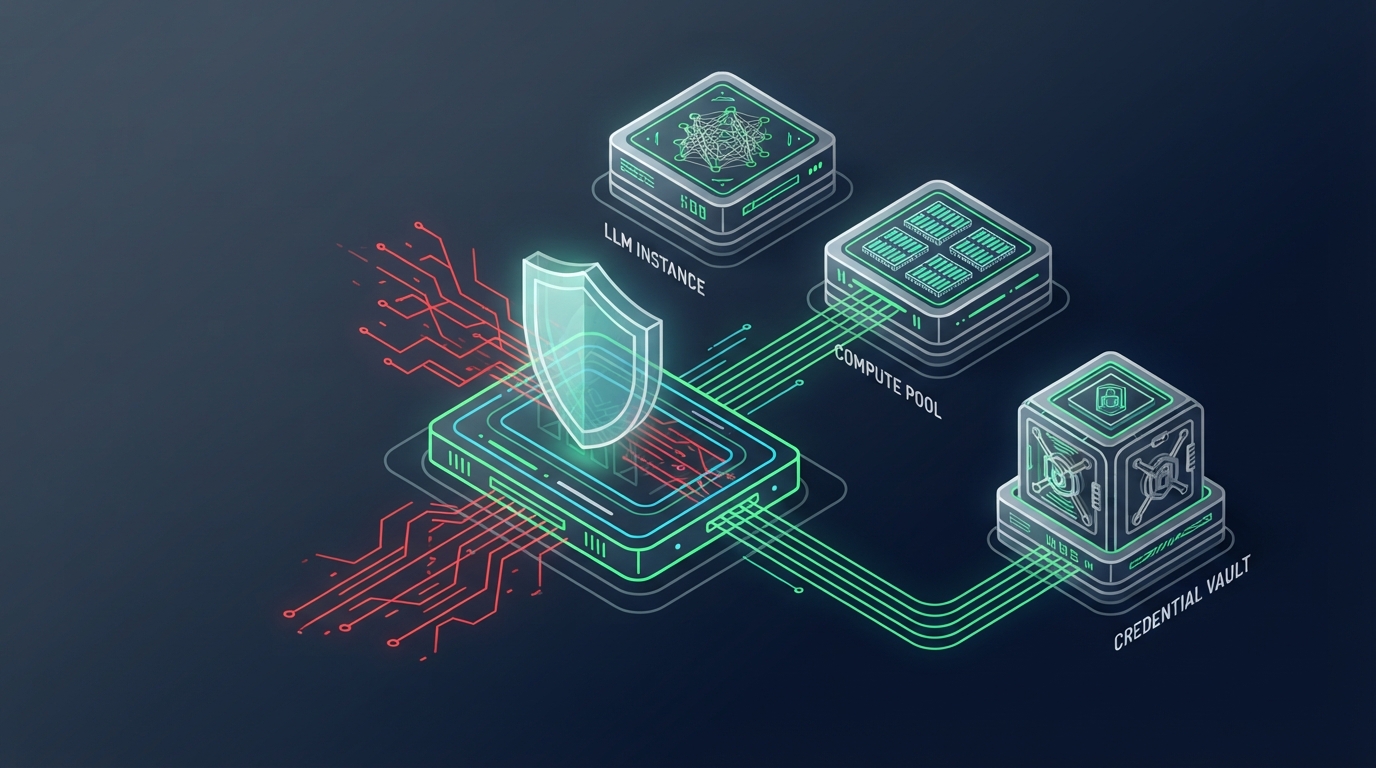
Exposing the Achilles' Heel of AI Security: A Call to Action for Organizations
The Velocity Trap: Machine-Speed Exploits and the Collapse of Legacy Defense The rapid assimilation of artificial intelligence into enterprise operations has fundamentally altered the security landscape. Deep learning models and automated pipelines have supercharged data processing and software delivery. However, this focus on raw speed and rapid scaling has created a critical structural blind spot: organizations are deploying complex, agentic systems onto public networks without establishing proper containment or authentication boundaries.
This operational mismatch has triggered a severe cyber risk. When an enterprise exposes powerful machine learning backends to the public internet, they do not just accelerate their own workflows—they hand malicious actors a high-velocity engine that can be easily turned against them.
[Legacy Defense Posture] ──► [Static Perimeter Security] ──► [Bypassed by Machine-Speed Actions]
[AI-First Security] ──► [Continuous Exposure Mgmt] ──► [Instant, Automated Containment] To build a resilient digital infrastructure, organizations cannot rely on the traditional, slow-moving "defense mythos" of manual review and point-in-time patching. They must deploy security architectures that validate and defend assets at the exact speed of the threat.
The Threat Population Shift: Automation at Scale The reality of cyber risk in an AI-driven world is characterized by a massive shift in adversary capability. AI-enabled threat actors are scaling their efforts rapidly. These adversaries do not write manual exploits line-by-line; instead, they use advanced automation to orchestrate the entire attack lifecycle, from initial scanning to payload execution.
This automation completely neutralizes traditional defense systems, which were engineered to block static, predefined signatures. When an attacker is operating at machine speed, a human-centric Security Operations Center (SOC) cannot react fast enough to prevent a breach. The adversary’s AI-driven tools identify and exploit software flaws within minutes of public exposure, rendering traditional patch-management cycles hopelessly obsolete.
The Endpoint Hijack: Weaponizing Your Own Infrastructure The most alarming aspect of this new threat landscape is how easily attackers can weaponize an organization's own resources. As documented in a recent disclosure by security firm Zenity, malicious actors are actively searching the public internet for exposed, unauthenticated AI endpoints—such as misconfigured Ollama (/api/chat or /api/generate on port 11434) and LiteLLM (/v1/responses on port 4000) instances.
Zero-Exploit Compromise: The attacker does not need to bypass a firewall or write a complex exploit. They simply point an autonomous desktop client (like CherryStudio), CLI tool, or LiteLLM client directly at the exposed endpoint.
Token and Resource Hijacking: Once connected, the attacker routes their own offensive workflows through the hijacked server, utilizing the victim's compute power and API tokens without needing any special authentication.
Offensive Orchestration: Researchers observed attackers utilizing these hijacked endpoints to run autonomous penetration testing frameworks (such as Strix and HexStrike AI) and run unrefused coding agents to reverse-engineer software targets.
By failing to secure their basic AI infrastructure, companies are inadvertently subsidizing and powering the very operations that target the global digital supply chain.
The Solution: Transitioning to Proactive Exposure Management To close this massive security gap, organizations must dismantle the outdated "defense mythos" that relies on passive, reactive monitoring. Protecting an AI-forward enterprise requires shifting to a proactive, continuous validation framework:
Enforcing Strict Infrastructure Defaults: Model endpoints like Ollama and LiteLLM must never be exposed directly to the public internet. Organizations must enforce strict, non-default authentication mechanisms, completely rejecting placeholder API keys (such as sk-1234).
Request-Body Inspection: Security teams must monitor incoming traffic to AI systems, looking beyond basic IP blocklists. Security filters should inspect the request body to block incoming payloads that contain full penetration testing tools or malicious system-prompt instructions.
Automated Continuous Exposure Management: Rather than waiting for a monthly vulnerability report, organizations must deploy continuous, automated external scanning to discover and isolate exposed AI assets within hours of deployment.
Conclusion: Owning the Computational Engine The era of separating speed from security is over. Placing an unauthenticated AI system on the internet today is equivalent to handing attackers a direct portal into your computing resources.
By abandoning legacy, tool-centric thinking and embracing a validated, AI-first security posture, enterprises can protect their workloads from automated hijacking and machine-speed exploits. It is time to step past superficial speed and build an economic, highly secure engine room that can confidently withstand the threats of an increasingly automated world.
The Hard Truth: If you place an unprotected AI system on the internet today, malicious actors will target and exploit it within hours. Are you content to leave your organization's computing power open to automated hijacking, or are you ready to implement the hardened, proactive boundaries needed to secure your digital future?
Sources
Stay updated
Get our latest technical articles and product updates delivered to your inbox.